

Connecting Miro's MCP Server to MCP Clients
Step by step guides on how to configure Miro's MCP Server to MCP Clients.
Feedback form.
This page shows examples of how to connect to Miro's MCP Server to other AI Tools.
The UI of each MCP Client on this page may have changed recently, so please use this as a general guide. See the documentation of the MCP Client of your choice for most up to date information.
For connecting with Claude, Claude Code, Codex and ChatGPT, Cursor, Gemini CLI, or VS Code, see our get started section.
GitHub Agents
-
Go to https://github.com/apps/miro and click on
install. -
Choose the org you want to install the app into.
-
Select the repo's you'd like to use the Miro MCP Server functionality with. Then click on
install and authorize. -
Auth into the Miro team you'd like to use the MCP Server with.
-
Go to the repo you'd like to use the agent with, and click on the
Agentstab. Choose theMiro agent.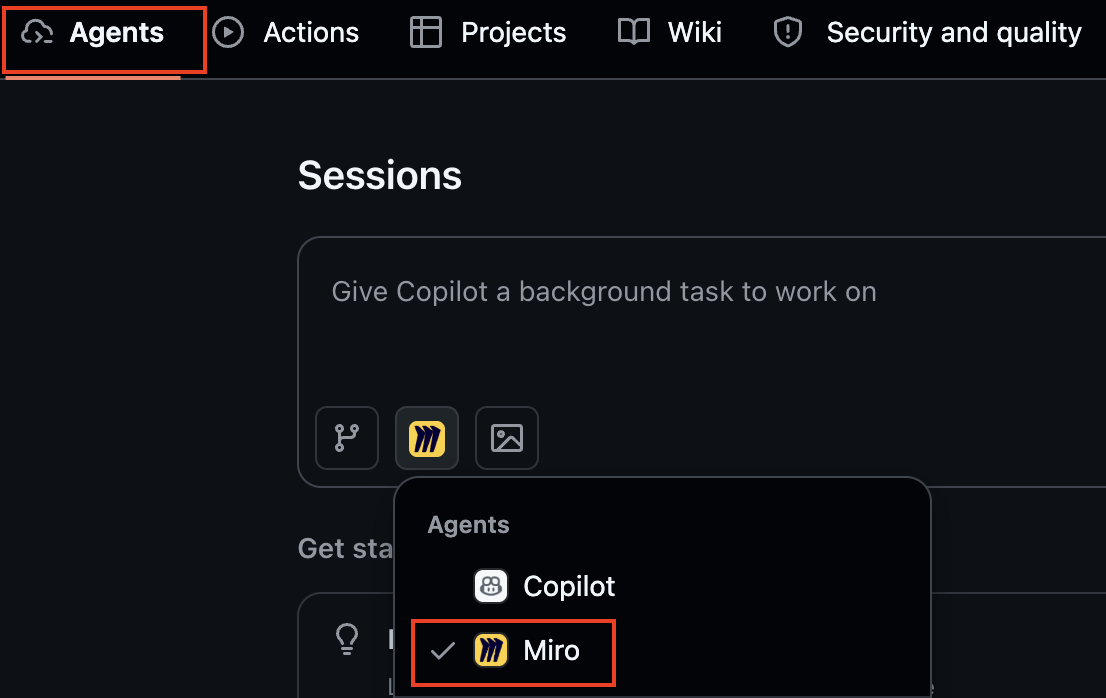
Select the Miro Agent from the Agents tab.
-
Try it out! You can ask the agent to:
"Visualize this PR [paste in PR link] on a new Miro board".
Lovable
- Log into lovable.dev.
- Click on your profile in the top right.
- Click on Settings -> Integrations. Scroll down to Your MCP Servers and find Miro. Click
Set up.
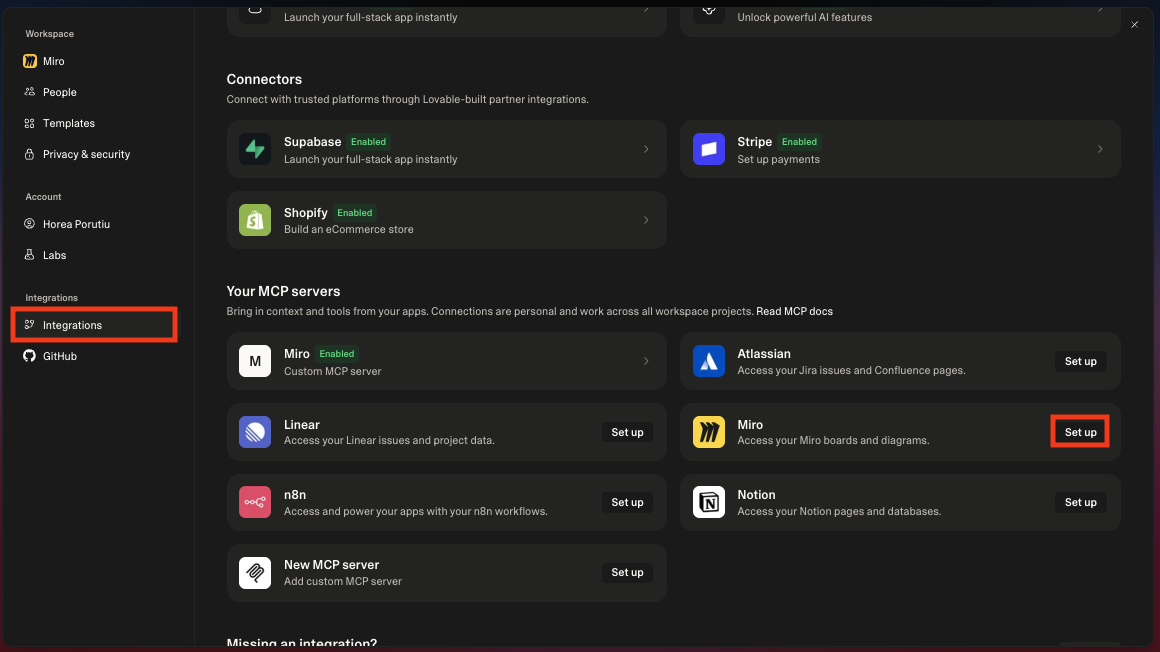
- Click on
Connectand then follow the Miro OAuth flow to install Miro's MCP Server on the team of your choice. You'll only be able to use MCP on boards from the team you authorize.
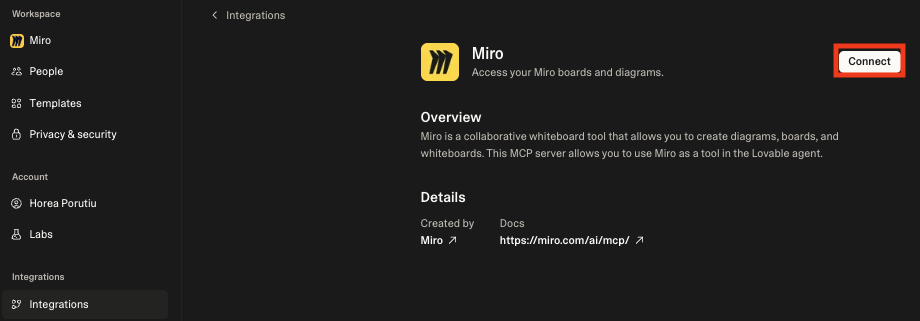
🎉 That's it! You've now connected Miro's MCP Server to Lovable!
Replit
To use MCP with the Miro board in the video, use this template to bring that same Miro board into your account.And the REPL from video above.
- Click on button below to install Miro's MCP Server in Replit.
- Click on Test & Save.
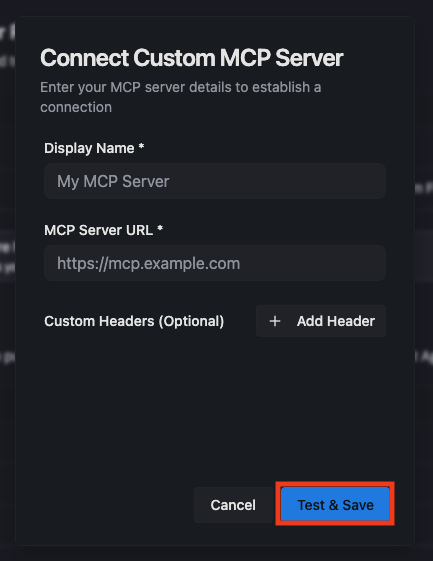
- Click on Authorize with OAuth. This will start the OAuth flow to authenticate into your Miro account. Select the Miro Team where you want to use MCP. See Miro OAuth flow for MCP for more details.
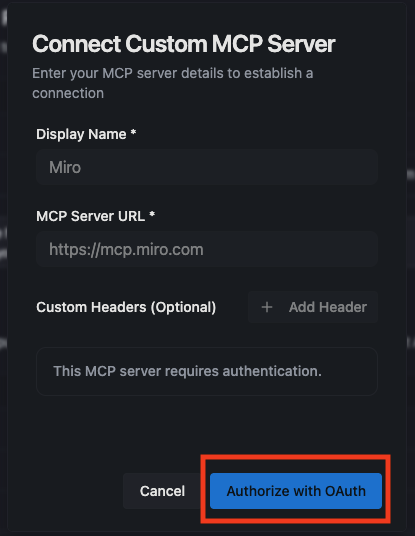
- Now you can start using your content inside Miro to build prototypes in Replit, just make sure to include the board ID you want to reference in your prompt!
Windsurf
- Go to Windsurf settings -> Windsurf Settings -> Cascade -> Manage MCPs -> Configure and then add in the following JSON:
{
  "mcpServers": {
    "miro-mcp": {
      "url": "https://mcp.miro.com/",
      "disabled": false,
      "autoApprove": []
    }
  }
}- Go through the Miro OAuth flow and add the MCP app on the team of your choice.
- Start prompting Windsurf to use Miro MCP, we recommend
code_create_from_boardadd in a board URL like https://miro.com/app/board/uX1234567/ and hit enter.
Kiro IDE
- Find the Miro Kiro Power, as shown below, and click on "Open in Kiro".
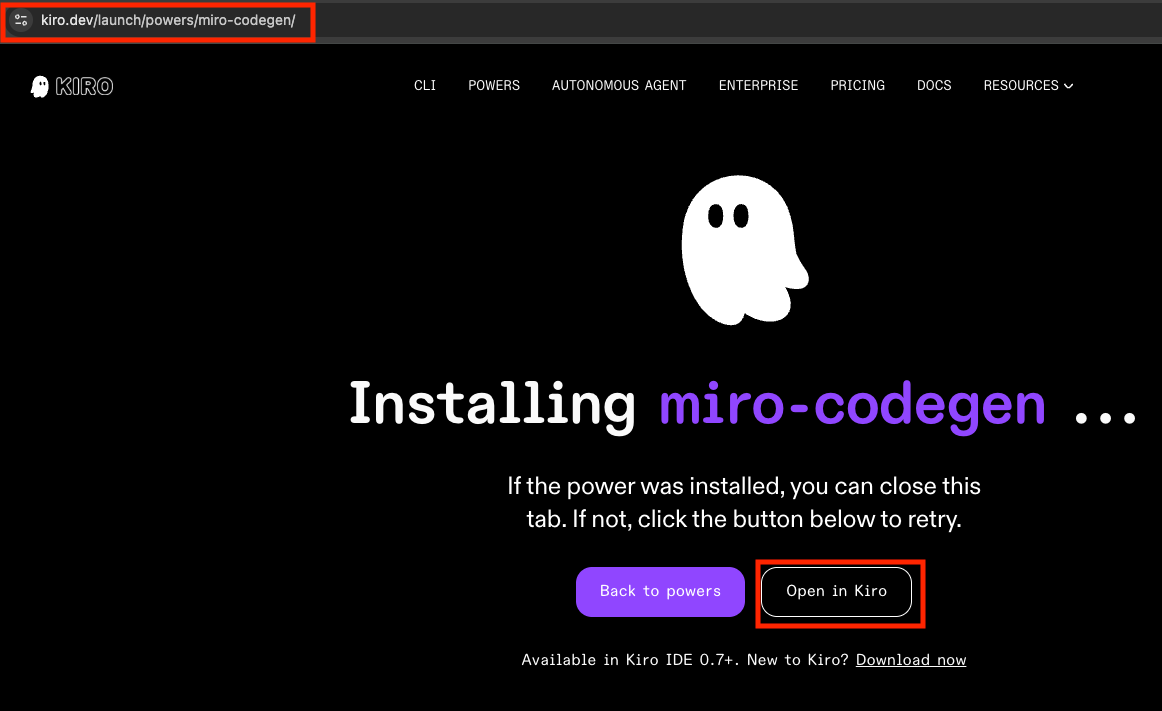
- Click on "Install".
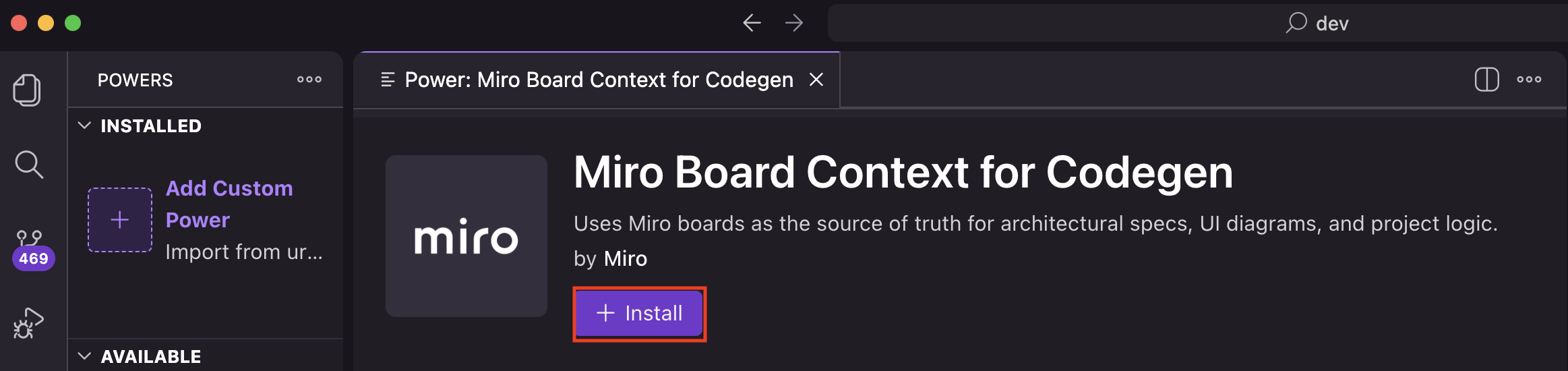
- Click on "Try Power".
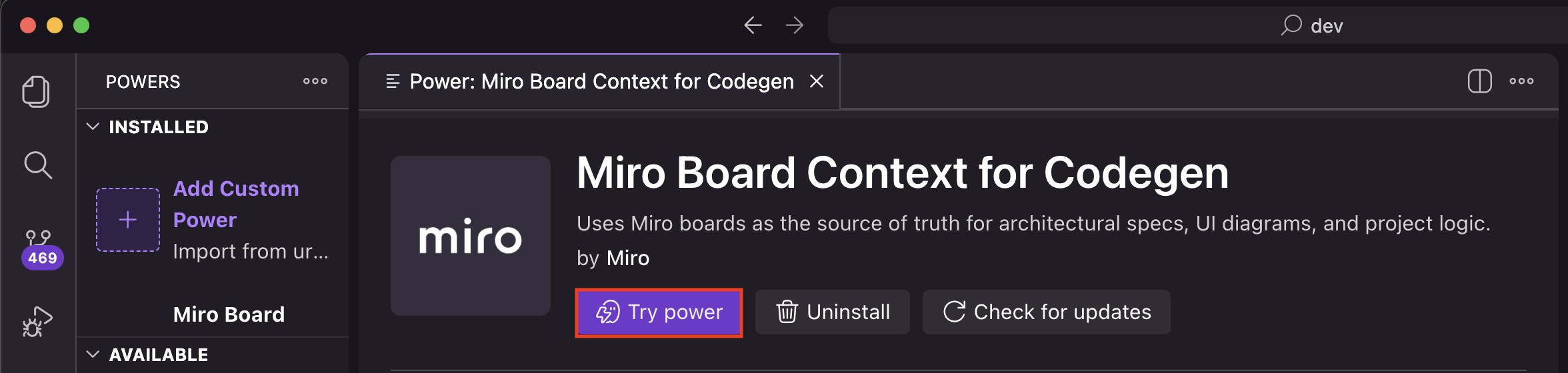
- That's it! When you click on "Try Power" the agent should tell you the next steps. You can drop in a Miro board URL to analyze your board, or generate docs, tables, diagrams, and more coming soon!
If you don't want to install Miro MCP via the Kiro Power, you can still install it manually, although we recommend using the Power.
Go to Workspace settings and then search for "MCP" in the search bar.
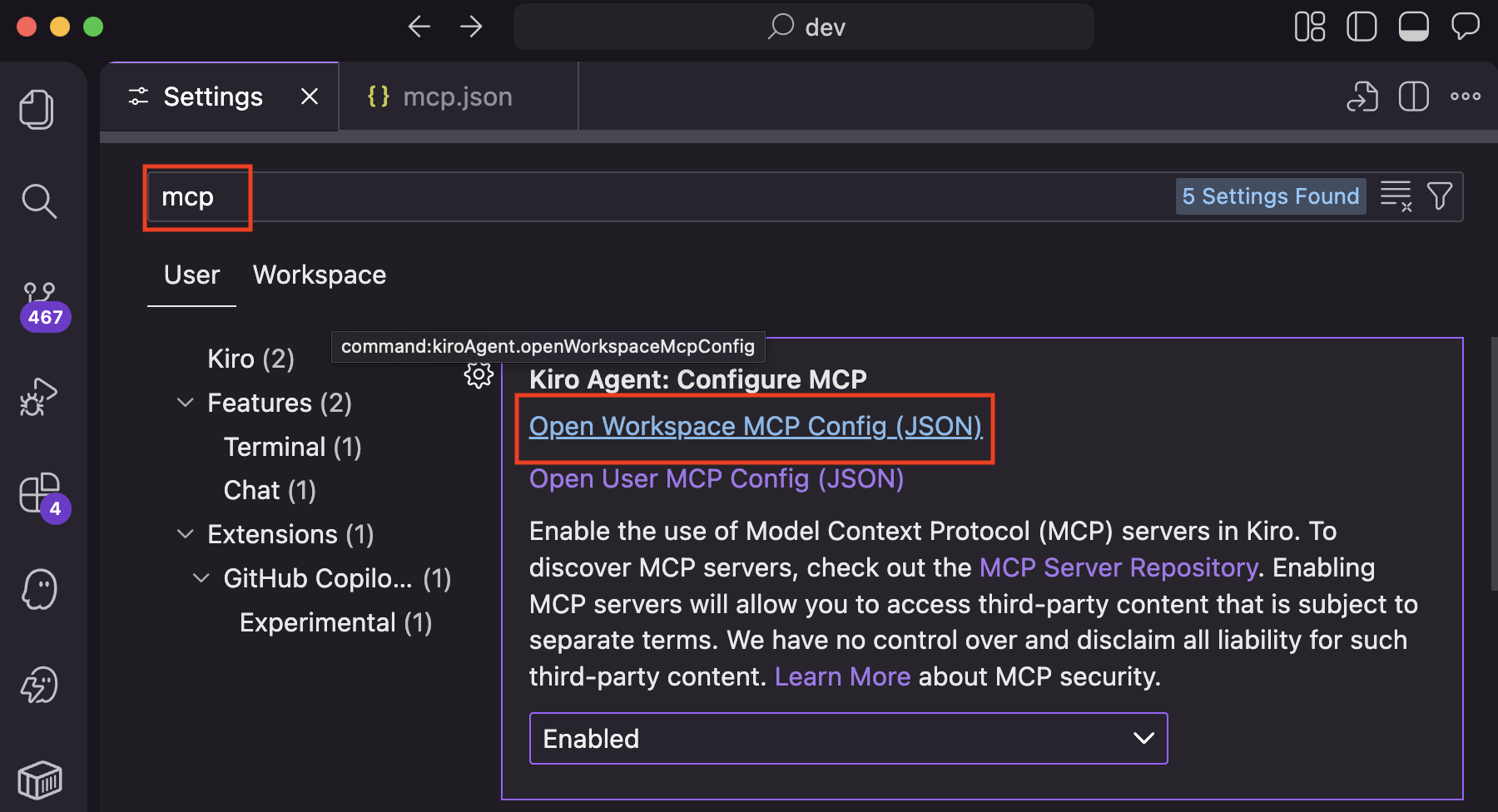
After searching for MCP settings, open either Workspace or User MCP Config
- Open Workspace Config for MCP, this should open an
mcp.jsonfile. - Add in the following JSON and save it:
{
  "mcpServers": {
    "miro-mcp": {
      "url": "https://mcp.miro.com/",
      "oauthScopes": [],
    }
  }
}
- You'll be asked to first allow the Kiro app, and then once you click allow you'll be asked to auth into Miro by following the Miro OAuth flow. Add the MCP app on the team of your choice that you wish to use MCP with.
- Try this prompt: "Summarize the content on this board": [your-board-URL] OR "create me a sequence diagram of the data flow for [enter app of your choice] and add it to this board [your-board-URL]
Kiro CLI
- After you install Kiro CLI, ensure your MCP Config file looks like this:
{
  "mcpServers": {
    "miro-mcp": {
      "url": "https://mcp.miro.com/",
      "oauthScopes": [],
    }
  }
}
- Go through the Miro OAuth flow and add the MCP app on the team of your choice.
- Start prompting Kiro CLI to use Miro MCP, we recommend
code_explain_on_boardadd in a board URL like https://miro.com/app/board/uX1234567/ and hit enter.
Amazon Q IDE Extension
Read more about Amazon Q IDE Extension here.
- After you install the extension, ensure your configuration looks like this (ensure Transport is http and the url is https://mcp.miro.com. Then hit save.
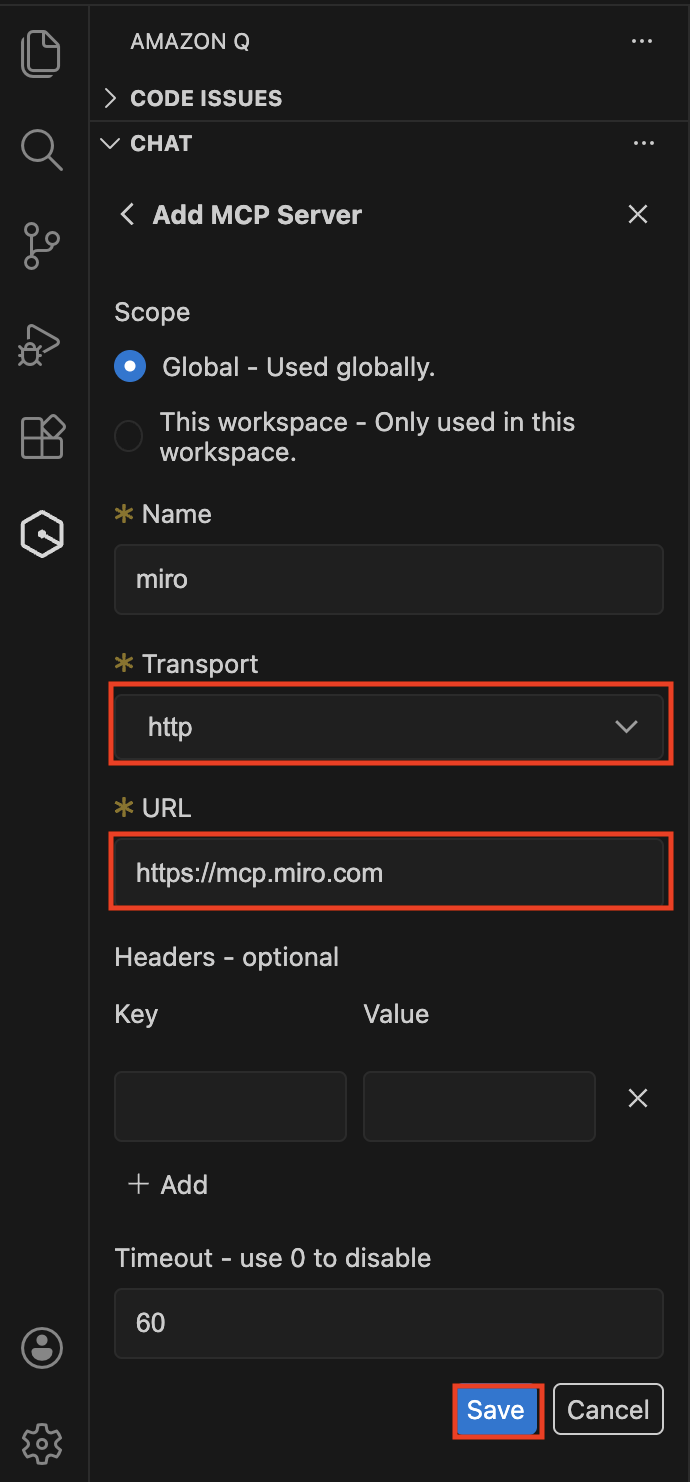
After that, you are ready to start prompting!
Updated 8 days ago